
CYSII Board:
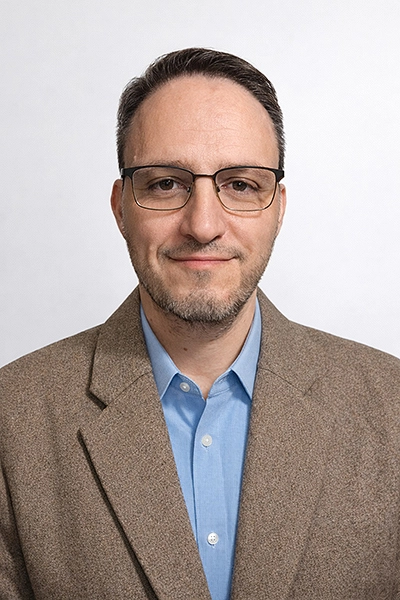
Christodoulos Ioannou is a seasoned Intelligence Analyst, specializing in Counter-Intelligence, Hybrid Threats and Cognitive Security.
Christodoulos has worked for a number of years as an Analyst engaging in strategic and operational analysis across a wide array of national security topics before transitioning to the Private sector. His work in the private sector included producing actionable intelligence on ongoing conflicts with high level recipients, as well as working for firms dealing in Geopolitical and business intelligence.
His main research interests include examining the application of Counter-Intelligence methodology in countering Hybrid Threats, Hybrid Threats analysis, Intelligence Cooperation, Regional and International Security issues, the role of the private sector in intelligence and others.
He holds a BscEcon (Hons) in International Politics and Intelligence studies from the University of Wales, Aberystwyth and a MA in Intelligence and Security Studies from the University of Salford, where he wrote his thesis on the prospects of a centralized EU intelligence agency. He is currently a PhD candidate in Police Studies at the University of South Wales with his research focusing on Counter-Intelligence and Hybrid Threats.
Christodoulos is an associate in think tanks such as the Ukraine Foundation and the Research Institute for European and American Studies.

Myrto Demetriou is a cognitive and educational psychologist specialising in cognitive security and counter-disinformation.
Her work focuses on how perception, attention, and judgement are shaped—and deliberately distorted—through malign influence, propaganda, and manipulation in contested information environments. She translates cognitive science into practical, intelligence-informed frameworks for recognising influence patterns, stress-testing claims, and strengthening decision quality under uncertainty.
Across academic and institutional settings, she has contributed to research, training, and applied analysis, helping teams identify vulnerabilities in reasoning, reduce susceptibility to manipulation, and build resilience after exposure to influence operations. Her approach combines behavioral science with verification discipline—bridging human factors (bias, emotion, identity, group dynamics) and evidence-handling (source evaluation, validation, and structured analytic thinking).
Myrto holds an MA in Cognitive & Educational Psychology from the University of Cyprus and is a licensed psychologist in Cyprus. She has specialist CBT training through the Beck Institute and has pursued training in open-source investigation and verification, including Bellingcat-aligned OSINT methods in research, investigation, data analysis, and reporting.
Areas of professional focus: cognitive security; counter-disinformation and influence analysis; judgement and decision-making under uncertainty; verification and OSINT methodologies;
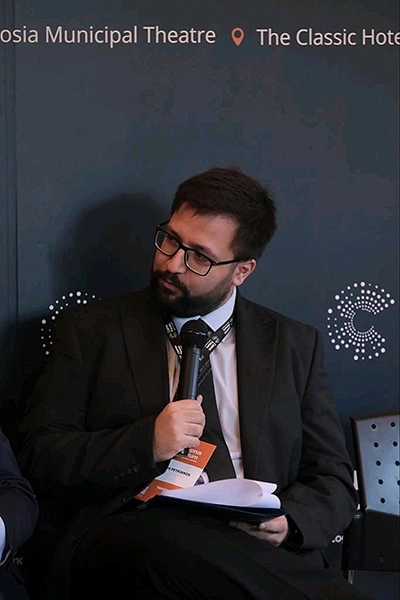
Dr. Petros Petrikkos is a national security specialist with a PhD in International Relations and European Studies. He has a growing professional experience
spanning academic institutions, consultancy networks, international organisations, and government agencies.
His work sits at the intersection of justice and security, transparency, global politics and EU institutions, and country expertise (Cyprus, Estonia, Lebanon). His PhD has focused on small states (Cyprus and Estonia) and the EU toolkits through which they have countered hybrid security threats and challenges to their own public and governance practices.
Dr. Petrikkos has also led and contributed to high-level research and policy advisory roles focused on a range of subjects, including legal policy and work, national security and defence, regional conflict dynamics, international cooperation, and health frameworks. Among others, he has worked with the University of Nicosia, the Government of the Republic of Cyprus, the United Nations, and the EU. He has thus developed evidence-based recommendations that have informed national policy decisions and regional dialogues.
Dr. Petrikkos has authored academic publications, policy briefs, and confidential assessments, often serving as a liaison between academic expertise and policymaking priorities, bridging theory with actionable insight.
In addition to technical skills in political risk assessment and policy design, he brings cross-cultural experience and fluency in working with multi-stakeholder coalitions on sensitive national and regional issues. His current focus includes hybrid threats, transparency and justice, e-governance, and the evolution of EU institutions in a rapidly changing global order.
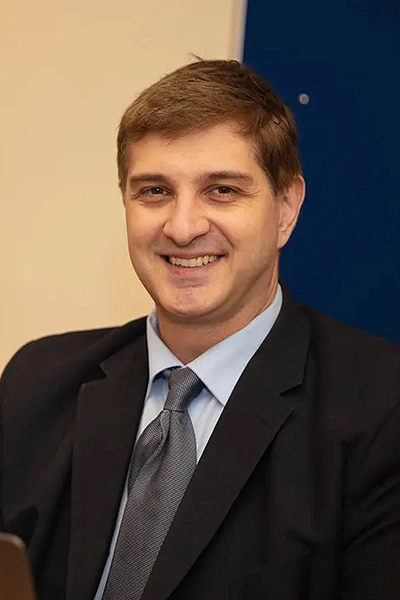
Prof Dr Christian Kaunert is Professor of International Security at Dublin City University, Ireland. He is also Professor of Policing and Security, as well as Director of the International Centre for Policing and Security at the University of South Wales. In addition, he is Jean Monnet Chair, Director of the Jean Monnet Centre of Excellence and Director of the Jean Monnet Network on EU Counter-Terrorism (www.eucter.net). Previously, he served as Academic Director and Professor at the Institute for European Studies, Vrije Universiteit Brussel, a Professor of International Politics, Head of Discipline in Politics, and the Director of the European Institute for Security and Justice, a Jean Monnet Centre for Excellence, at the University of Dundee.
Prof Kaunert has researched and taught in many international universities, such as University of Shandong, Jinan, China, IBEI Barcelona, Spain, Diplomatic Academy Yerevan, Armenia – United Nations Development Mission, University of Cairo, Egypt, Collegio Carlo Alberto, Turin, Italy, Ecole nationale d’administration Paris, European Institute of Public Administration Maastricht, Netherlands, European Studies Institute (ESI) at Moscow, University of Porto, Portugal, etc.
He was previously Senior Lecturer at the University of Dundee, Marie Curie Senior Research Fellow at the European University Institute Florence, and Senior Lecturer in EU Politics & International Relations, University of Salford. Christian has been invited expert for the European Institute for Public Administration (EIPA), the Counter-Terrorism Committee of the European Parliament, the European Union Institute for Security Studies (an agency of the EU), the United Nations Development Programme (UNDP) and the North Atlantic Treaty Organisation (NATO).
Over his career, he has been awarded seven prestigious Marie Curie Fellowships, four Jean Monnet Chairs, and, finally, three Jean Monnet Centre of Excellence, as well as one Jean Monnet Network of Excellence ‘EUCTER’. Additionally, he was awarded a large Horizon 2020 research grant on Terrorist Radicalisation processes – Mindb4Act. He is currently Editor of the Journal of Contemporary European Studies, was also previously an elected member of the national (UK) Executive Committee of the University Association for Contemporary European Studies (UACES) and co-founded and co-led the special interest section on the Area of Freedom, Security and Justice of the European Union Studies Association (EUSA).
He has also previously been the Editor of the Journal of Contemporary European Research (JCER), on the Executive Committee member of the University Association for Contemporary European Studies (UACES), and an Expert for the European Parliament. He is also on the editorial board of the journal European Politics and Society (EPS) and the Journal of European Integration (JEI). Prof. Kaunert holds a PhD in International Politics & an MSc in European Politics from the University of Wales Aberystwyth, a BA (Hons) European Business from Dublin City University, ESB Reutlingen and a BA (Hons) Open University.
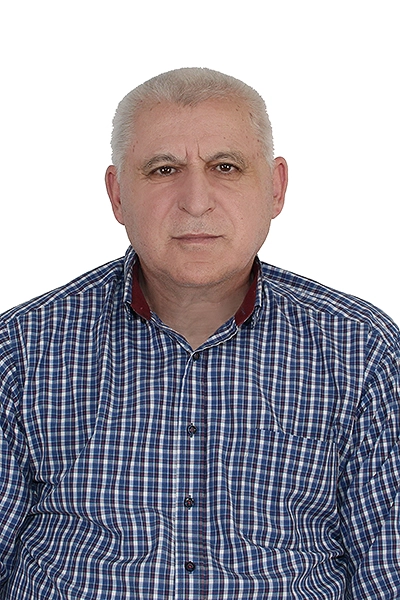
Prof. John M. Nomikos is the Founder and Director of the Research Institute for European and American Studies (RIEAS) based in Athens, Greece. He is Chairman of the European Intelligence Academy (EIA) and Founding Editor of the Journal of European and American Intelligence Studies (JEAIS).
He earned his Bachelor Degree in Sociology at the Northeast Louisiana University in 1987, his Master’s Degree in European Integration and Cooperation at the University of Hull, 1991, and his Doctorate Diploma in International Relations and Diplomacy at the Washington International University in 2001, his Diploma in Black and Caspian sea regions, U.S. European Command, Directorate of Intelligence in 2014 and his Certificate in the E.U. Security and Intelligence Awareness, European Security and Defense College, EU Commission in 2025.
He specialized on international relations, international security, counter-terrorism and U.S. Foreign Policy. He was awarded the “2025 Life Time Achievement” by the International Association for Intelligence Education” – (IAFIE Global, USA).
He is a member of the Canadian Association for Security and Intelligence Studies (CASIS) Vancouver and a member of the Australian Institute of Professional Intelligence Officers (AIPIO). He is a member of the Foreign Areas Officers Association (FAOA).
He is a member of the International Security and Strategy Group/Experts (ISSG) and the International Association of Law Enforcement Intelligence Analysts (IALEIA). He has participated in more than eighty international conferences and has written many articles, contributed chapters and edited books.
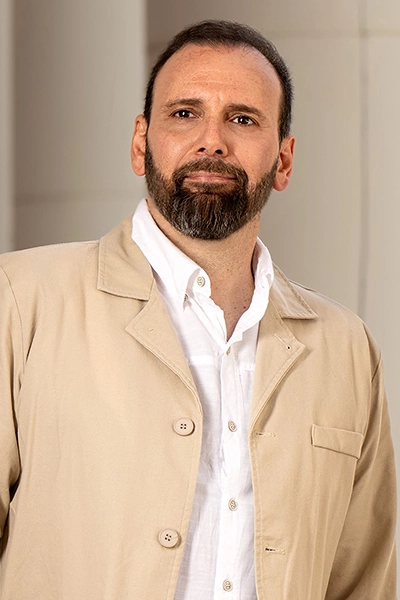
Joseph Fitsanakis, Ph.D., is Professor of Intelligence and Security Studies at Coastal Carolina University, where he also serves as director of the Intelligence Operations Command Center and Assistant Director of the Center for Applied Intelligence. He is a member of the Academic Security and Counter Exploitation program and manages Coastal Carolina University’s Educational Partnership Agreements with the United States National Security Agency (NSA) and the United States Secret Service (USSS).
Dr. Fitsanakis has published widely on intelligence collection, information security, cyber security, and sub-state political violence, among other topics. He has also published comparative research on intelligence agencies in southern Europe, Russia, sub-Saharan Africa, and Southeast Asia focusing on China and North Korea.
In addition to his teaching and research duties, Dr. Fitsanakis supervises CCU’s Applied Intelligence Project (AIP), which enables students to engage in semester-long research projects assigned to them by United States Federal Government agencies. The AIP has worked with the NSA, USS, Federal Bureau of Investigation, Department of Homeland Security, and the National Ground Intelligence Center, among other agencies.
Prof. Dr. Darko Trifunovic is a full-time research professor and a founding member and Director of the Institute for National and International Security. Dr. Trifunovic is Editor in Chief of the “Security Science Journal”.
Prof. Dr. Darko Trifunovic was awarded Doctor Honoris Causa by the University of Public and Individual Security – Apeiron, Krakow, Poland. At the same time, Dr. Trifunovic was elected as a visiting professor at the University of St. Kliment Ohridski, Faculty of Security Studies, Skopje, N. Macedonia.
Dr. Darko Trifunovic is fully employed at the Faculty of Security Studies at the University of Belgrade. Prof. Dr. Darko Trifunovic is a guest professor at Matej Bel University, Faculty of Political Science, Slovakia, and a Senior Researcher at Bar-Ilan University, Israel. He is a Senior Advisor at the Research Institute for European and American Studies in Athens, Greece.
He is a specialist in Security Studies, Intelligence & Counter-Intelligence, as well as Counter-Terrorism, National, and International Security. He is a former diplomat (First Secretary of the Foreign Service of Bosnia and Herzegovina at the United Nations). Dr. Trifunovic was the official delegate in Rome in 1998 during the diplomatic conference that established the International Criminal Court.
Dr. Trifunovic is the representative for Serbia and Montenegro of the International Strategic Studies Association (ISSA), Defense & Foreign Affairs publications, and the Global Information System. The Shanghai Center for International Studies appointed him as the first foreign expert for the Olympic Games (2008) security preparation in China. In 2010, he was engaged in World Expo security preparations.
Prof. Dr. Darko Trifunovic is one of the founding members of the International Counter-Terrorism Academic Community (ICTAC). He has published many academic books and articles. Prof. Dr. Darko Trifunovic received the highest military award of the Military Security Agency of Serbia – the Great Golden Badge.
CYSII Board:
Christodoulos Ioannou is a seasoned Intelligence Analyst, specializing in Counter-Intelligence, Hybrid Threats and Cognitive Security.
Christodoulos has worked for a number of years as an Analyst engaging in strategic and operational analysis across a wide array of national security topics before transitioning to the Private sector. His work in the private sector included producing actionable intelligence on ongoing conflicts with high level recipients, as well as working for firms dealing in Geopolitical and business intelligence.
His main research interests include examining the application of Counter-Intelligence methodology in countering Hybrid Threats, Hybrid Threats analysis, Intelligence Cooperation, Regional and International Security issues, the role of the private sector in intelligence and others.
He holds a BscEcon (Hons) in International Politics and Intelligence studies from the University of Wales, Aberystwyth and a MA in Intelligence and Security Studies from the University of Salford, where he wrote his thesis on the prospects of a centralized EU intelligence agency. He is currently a PhD candidate in Police Studies at the University of South Wales with his research focusing on Counter-Intelligence and Hybrid Threats.
Christodoulos is an associate in think tanks such as the Ukraine Foundation and the Research Institute for European and American Studies.
Myrto Demetriou is a cognitive and educational psychologist specialising in cognitive security and counter-disinformation.
Her work focuses on how perception, attention, and judgement are shaped—and deliberately distorted—through malign influence, propaganda, and manipulation in contested information environments. She translates cognitive science into practical, intelligence-informed frameworks for recognising influence patterns, stress-testing claims, and strengthening decision quality under uncertainty.
Across academic and institutional settings, she has contributed to research, training, and applied analysis, helping teams identify vulnerabilities in reasoning, reduce susceptibility to manipulation, and build resilience after exposure to influence operations. Her approach combines behavioral science with verification discipline—bridging human factors (bias, emotion, identity, group dynamics) and evidence-handling (source evaluation, validation, and structured analytic thinking).
Myrto holds an MA in Cognitive & Educational Psychology from the University of Cyprus and is a licensed psychologist in Cyprus. She has specialist CBT training through the Beck Institute and has pursued training in open-source investigation and verification, including Bellingcat-aligned OSINT methods in research, investigation, data analysis, and reporting.
Areas of professional focus: cognitive security; counter-disinformation and influence analysis; judgement and decision-making under uncertainty; verification and OSINT methodologies;
Dr. Petros Petrikkos is a national security specialist with a PhD in International Relations and European Studies. He has a growing professional experience
spanning academic institutions, consultancy networks, international organisations, and government agencies.
His work sits at the intersection of justice and security, transparency, global politics and EU institutions, and country expertise (Cyprus, Estonia, Lebanon). His PhD has focused on small states (Cyprus and Estonia) and the EU toolkits through which they have countered hybrid security threats and challenges to their own public and governance practices.
Dr. Petrikkos has also led and contributed to high-level research and policy advisory roles focused on a range of subjects, including legal policy and work, national security and defence, regional conflict dynamics, international cooperation, and health frameworks. Among others, he has worked with the University of Nicosia, the Government of the Republic of Cyprus, the United Nations, and the EU. He has thus developed evidence-based recommendations that have informed national policy decisions and regional dialogues.
Dr. Petrikkos has authored academic publications, policy briefs, and confidential assessments, often serving as a liaison between academic expertise and policymaking priorities, bridging theory with actionable insight.
In addition to technical skills in political risk assessment and policy design, he brings cross-cultural experience and fluency in working with multi-stakeholder coalitions on sensitive national and regional issues. His current focus includes hybrid threats, transparency and justice, e-governance, and the evolution of EU institutions in a rapidly changing global order.
Prof Dr Christian Kaunert is Professor of International Security at Dublin City University, Ireland. He is also Professor of Policing and Security, as well as Director of the International Centre for Policing and Security at the University of South Wales. In addition, he is Jean Monnet Chair, Director of the Jean Monnet Centre of Excellence and Director of the Jean Monnet Network on EU Counter-Terrorism (www.eucter.net). Previously, he served as Academic Director and Professor at the Institute for European Studies, Vrije Universiteit Brussel, a Professor of International Politics, Head of Discipline in Politics, and the Director of the European Institute for Security and Justice, a Jean Monnet Centre for Excellence, at the University of Dundee.
Prof Kaunert has researched and taught in many international universities, such as University of Shandong, Jinan, China, IBEI Barcelona, Spain, Diplomatic Academy Yerevan, Armenia – United Nations Development Mission, University of Cairo, Egypt, Collegio Carlo Alberto, Turin, Italy, Ecole nationale d’administration Paris, European Institute of Public Administration Maastricht, Netherlands, European Studies Institute (ESI) at Moscow, University of Porto, Portugal, etc.
He was previously Senior Lecturer at the University of Dundee, Marie Curie Senior Research Fellow at the European University Institute Florence, and Senior Lecturer in EU Politics & International Relations, University of Salford. Christian has been invited expert for the European Institute for Public Administration (EIPA), the Counter-Terrorism Committee of the European Parliament, the European Union Institute for Security Studies (an agency of the EU), the United Nations Development Programme (UNDP) and the North Atlantic Treaty Organisation (NATO).
Over his career, he has been awarded seven prestigious Marie Curie Fellowships, four Jean Monnet Chairs, and, finally, three Jean Monnet Centre of Excellence, as well as one Jean Monnet Network of Excellence ‘EUCTER’. Additionally, he was awarded a large Horizon 2020 research grant on Terrorist Radicalisation processes – Mindb4Act. He is currently Editor of the Journal of Contemporary European Studies, was also previously an elected member of the national (UK) Executive Committee of the University Association for Contemporary European Studies (UACES) and co-founded and co-led the special interest section on the Area of Freedom, Security and Justice of the European Union Studies Association (EUSA).
He has also previously been the Editor of the Journal of Contemporary European Research (JCER), on the Executive Committee member of the University Association for Contemporary European Studies (UACES), and an Expert for the European Parliament. He is also on the editorial board of the journal European Politics and Society (EPS) and the Journal of European Integration (JEI). Prof. Kaunert holds a PhD in International Politics & an MSc in European Politics from the University of Wales Aberystwyth, a BA (Hons) European Business from Dublin City University, ESB Reutlingen and a BA (Hons) Open University.
Prof. John M. Nomikos is the Founder and Director of the Research Institute for European and American Studies (RIEAS) based in Athens, Greece. He is Chairman of the European Intelligence Academy (EIA) and Founding Editor of the Journal of European and American Intelligence Studies (JEAIS).
He earned his Bachelor Degree in Sociology at the Northeast Louisiana University in 1987, his Master’s Degree in European Integration and Cooperation at the University of Hull, 1991, and his Doctorate Diploma in International Relations and Diplomacy at the Washington International University in 2001, his Diploma in Black and Caspian sea regions, U.S. European Command, Directorate of Intelligence in 2014 and his Certificate in the E.U. Security and Intelligence Awareness, European Security and Defense College, EU Commission in 2025.
He specialized on international relations, international security, counter-terrorism and U.S. Foreign Policy. He was awarded the “2025 Life Time Achievement” by the International Association for Intelligence Education” – (IAFIE Global, USA).
He is a member of the Canadian Association for Security and Intelligence Studies (CASIS) Vancouver and a member of the Australian Institute of Professional Intelligence Officers (AIPIO). He is a member of the Foreign Areas Officers Association (FAOA).
He is a member of the International Security and Strategy Group/Experts (ISSG) and the International Association of Law Enforcement Intelligence Analysts (IALEIA). He has participated in more than eighty international conferences and has written many articles, contributed chapters and edited books.
Joseph Fitsanakis, Ph.D., is Professor of Intelligence and Security Studies at Coastal Carolina University, where he also serves as director of the Intelligence Operations Command Center and Assistant Director of the Center for Applied Intelligence. He is a member of the Academic Security and Counter Exploitation program and manages Coastal Carolina University’s Educational Partnership Agreements with the United States National Security Agency (NSA) and the United States Secret Service (USSS).
Dr. Fitsanakis has published widely on intelligence collection, information security, cyber security, and sub-state political violence, among other topics. He has also published comparative research on intelligence agencies in southern Europe, Russia, sub-Saharan Africa, and Southeast Asia focusing on China and North Korea.
In addition to his teaching and research duties, Dr. Fitsanakis supervises CCU’s Applied Intelligence Project (AIP), which enables students to engage in semester-long research projects assigned to them by United States Federal Government agencies. The AIP has worked with the NSA, USS, Federal Bureau of Investigation, Department of Homeland Security, and the National Ground Intelligence Center, among other agencies.
Prof. Dr. Darko Trifunovic is a full-time research professor and a founding member and Director of the Institute for National and International Security. Dr. Trifunovic is Editor in Chief of the “Security Science Journal”.
Prof. Dr. Darko Trifunovic was awarded Doctor Honoris Causa by the University of Public and Individual Security – Apeiron, Krakow, Poland. At the same time, Dr. Trifunovic was elected as a visiting professor at the University of St. Kliment Ohridski, Faculty of Security Studies, Skopje, N. Macedonia.
Dr. Darko Trifunovic is fully employed at the Faculty of Security Studies at the University of Belgrade. Prof. Dr. Darko Trifunovic is a guest professor at Matej Bel University, Faculty of Political Science, Slovakia, and a Senior Researcher at Bar-Ilan University, Israel. He is a Senior Advisor at the Research Institute for European and American Studies in Athens, Greece.
He is a specialist in Security Studies, Intelligence & Counter-Intelligence, as well as Counter-Terrorism, National, and International Security. He is a former diplomat (First Secretary of the Foreign Service of Bosnia and Herzegovina at the United Nations). Dr. Trifunovic was the official delegate in Rome in 1998 during the diplomatic conference that established the International Criminal Court.
Dr. Trifunovic is the representative for Serbia and Montenegro of the International Strategic Studies Association (ISSA), Defense & Foreign Affairs publications, and the Global Information System. The Shanghai Center for International Studies appointed him as the first foreign expert for the Olympic Games (2008) security preparation in China. In 2010, he was engaged in World Expo security preparations.
Prof. Dr. Darko Trifunovic is one of the founding members of the International Counter-Terrorism Academic Community (ICTAC). He has published many academic books and articles. Prof. Dr. Darko Trifunovic received the highest military award of the Military Security Agency of Serbia – the Great Golden Badge.