
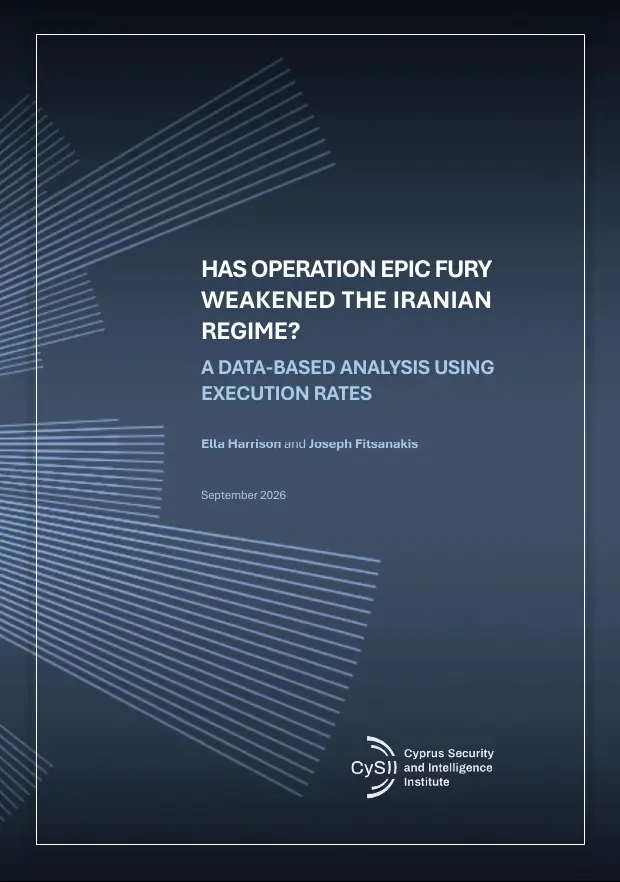
- By Ella Harrison and Joseph Fitsanakis – Present-day Iran is arguably the most prolific state executioner state in the world. It currently holds the unenviable record of executing the largest number of people per capita globally.
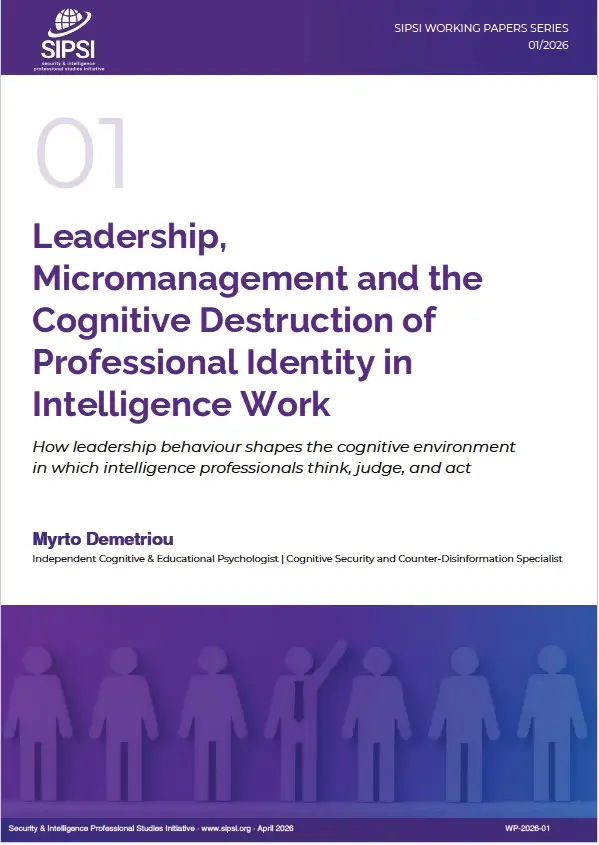
- How leadership behavioural shapes the cognitive environment in which intelligence professionals think, judge, and act. Read More: Leadership, Micromanagement and the Cognitive Destruction of Professional Identity in Intelligence Work – Myrto Demetriou, ΜΑ.
- This article examines the Russian Orthodox Church (ROC) as a strategic instrument within Russia’s hybrid warfare toolkit, analyzing its historical evolution, ideological functions, and operational role in contemporary conflicts, particularly the war against Ukraine. Drawing on hybrid warfare theory and historical evidence of state–church symbiosis, the study demonstrates how the ROC has been systematically instrumentalized to advance Russian political, security, and foreign policy objectives.
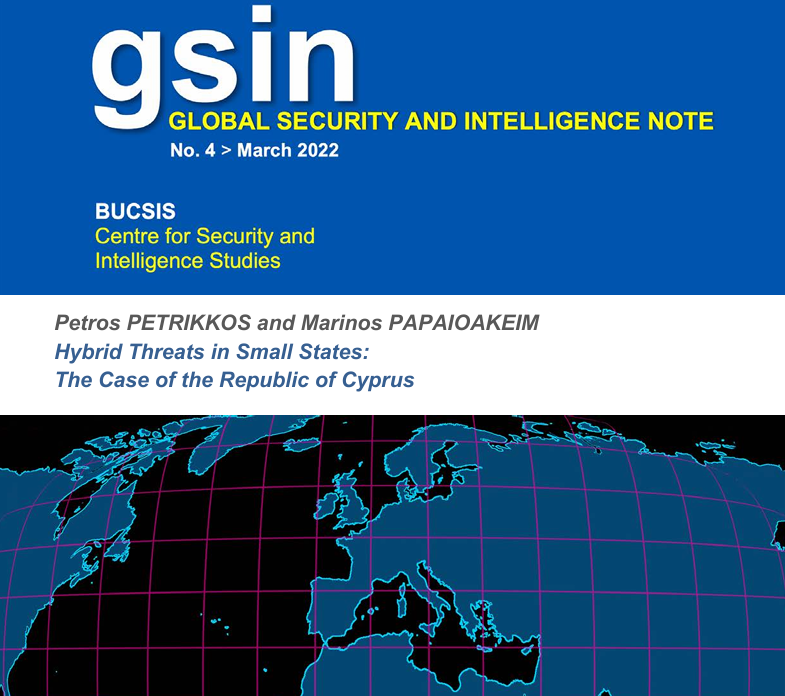
- The increasing number and complexity of hybrid threat activities forces small states, especially those with limited access to material resources, to reassess their foreign and defence policies. While the variable of ‘smallness’ may be sufficient to justify their overall engagement in dealing with conventional security threats, in the hybrid arena this is not the case.

- This essay focuses on the identification and evaluation of hybrid threats in the Republic of Cyprus which is one of many small states in the international system. Building on theoretical analysis and empirical evidence obtained from the study of the case, the authors examine the threats deriving from the overarching security problem – that is, the Turkish occupation and de facto military division of the island.
- By Ella Harrison and Joseph Fitsanakis – Present-day Iran is arguably the most prolific state executioner state in the world. It currently holds the unenviable record of executing the largest number of people per capita globally.
- How leadership behavioural shapes the cognitive environment in which intelligence professionals think, judge, and act. Read More: Leadership, Micromanagement and the Cognitive Destruction of Professional Identity in Intelligence Work – Myrto Demetriou, ΜΑ.
- This article examines the Russian Orthodox Church (ROC) as a strategic instrument within Russia’s hybrid warfare toolkit, analyzing its historical evolution, ideological functions, and operational role in contemporary conflicts, particularly the war against Ukraine. Drawing on hybrid warfare theory and historical evidence of state–church symbiosis, the study demonstrates how the ROC has been systematically instrumentalized to advance Russian political, security, and foreign policy objectives.
- The increasing number and complexity of hybrid threat activities forces small states, especially those with limited access to material resources, to reassess their foreign and defence policies. While the variable of ‘smallness’ may be sufficient to justify their overall engagement in dealing with conventional security threats, in the hybrid arena this is not the case.
- This essay focuses on the identification and evaluation of hybrid threats in the Republic of Cyprus which is one of many small states in the international system. Building on theoretical analysis and empirical evidence obtained from the study of the case, the authors examine the threats deriving from the overarching security problem – that is, the Turkish occupation and de facto military division of the island.