

The Cyprus Security and Intelligence Institute (CySII) participated in the Cyprus Forum 2026 on 29 September 2026, contributing to two panel discussions addressing contemporary challenges in security, information integrity, and the protection of democratic institutions.
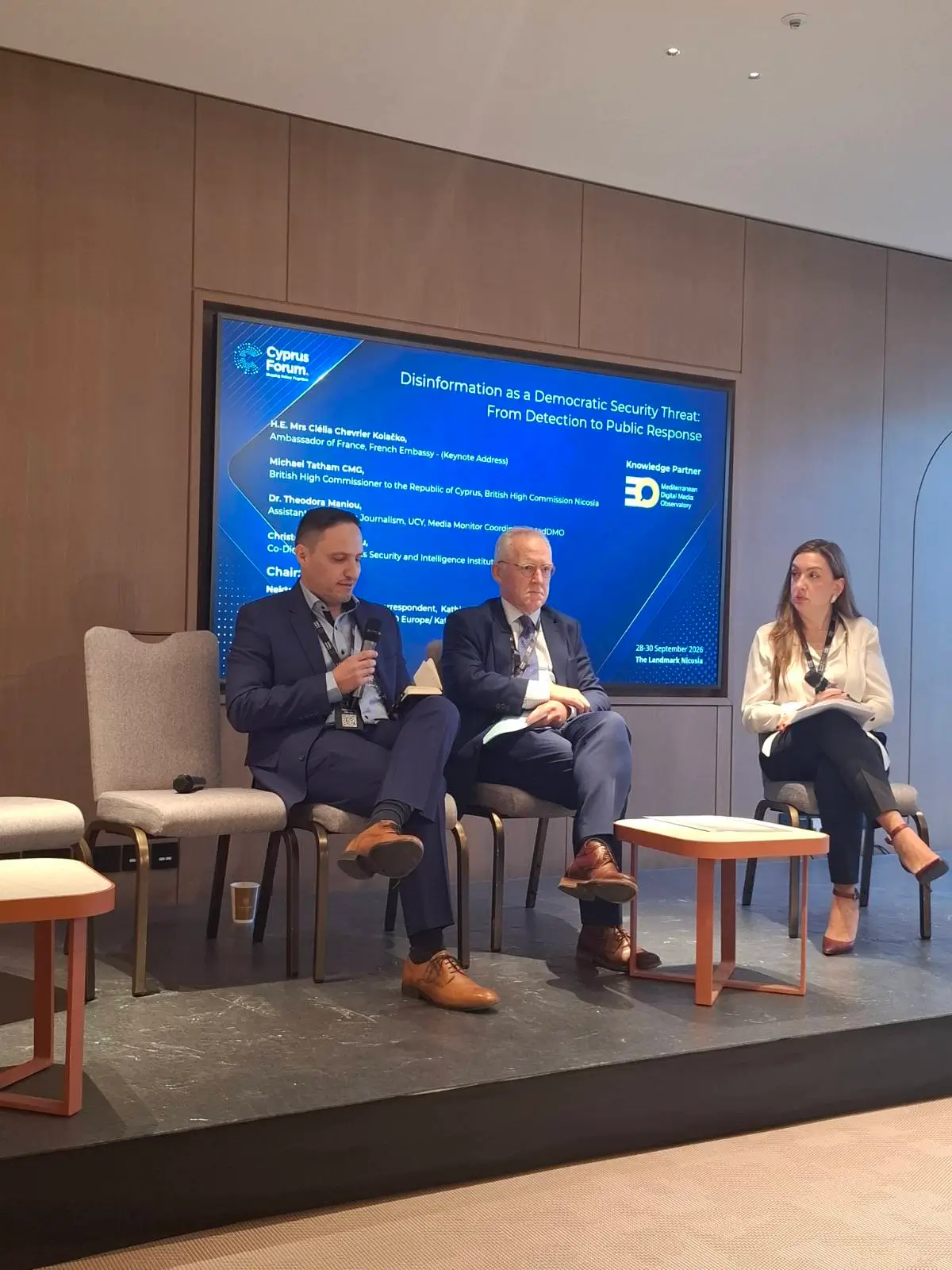
The first panel, “Disinformation as a Democratic Security Threat: From Detection to Public Response,” featured Christodoulos Ioannou, Co-Director of CySII, alongside representatives from diplomacy, journalism, and academia. The discussion focused on the need to establish credible procedures for attribution, timely and evidence-based public communication, and the correction of false information during significant disinformation incidents. It also explored ways to strengthen societal resilience and safeguard media independence. The panel featured H.E. Clélia Chevrier Kolačko, Ambassador of France to the Republic of Cyprus, as keynote speaker, and Michael Tatham CMG, British High Commissioner to the Republic of Cyprus, among its speakers. The discussion was chaired by Nektaria Stamouli, POLITICO Europe’s East Mediterranean correspondent and deputy editor of the English edition of Kathimerini.
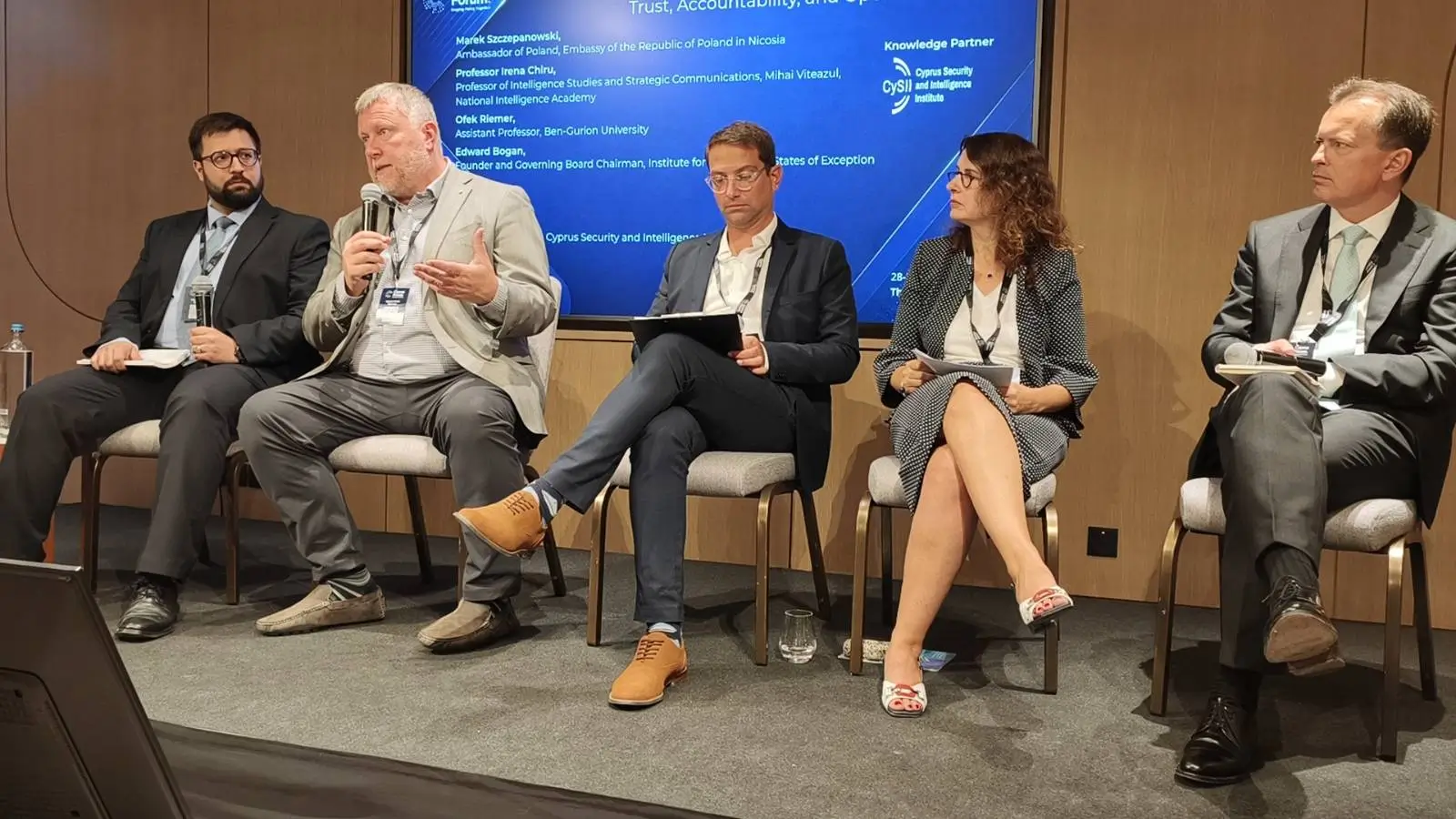
CySII also participated as a Knowledge Partner in the panel “Public Disclosure of Intelligence: Trust, Accountability, and Operational Risk,” chaired by Dr Petros Petrikkos, Head of Operations at the Institute. The panel brought together Marek Szczepanowski, Ambassador of Poland to the Republic of Cyprus; Professor Irena Chiru, Professor of Intelligence Studies and Strategic Communications at the Mihai Viteazul National Intelligence Academy; Dr Ofek Riemer, Assistant Professor at Ben-Gurion University; and Edward Bogan, Founder and Governing Board Chairman of the Institute for the Study of States of Exception. The discussion highlighted the importance of establishing clear principles governing the public disclosure of intelligence by relevant authorities, balancing the public’s need to be informed and institutional accountability with the protection of intelligence sources and methods, ongoing investigations, and operational effectiveness.
Through its contributions to both panels, CySII supported dialogue among institutional, diplomatic, and academic stakeholders on critical contemporary security issues, emphasising the importance of responsible public communication, evidence-based information, and public trust in democratic institutions.
More in Events/Conferences
The Cyprus Security and Intelligence Institute (CySII) participated in the Cyprus Forum 2026 on 29 September 2026, contributing to two panel discussions addressing contemporary challenges in security, information integrity, and the protection of democratic institutions.
The first panel, “Disinformation as a Democratic Security Threat: From Detection to Public Response,” featured Christodoulos Ioannou, Co-Director of CySII, alongside representatives from diplomacy, journalism, and academia. The discussion focused on the need to establish credible procedures for attribution, timely and evidence-based public communication, and the correction of false information during significant disinformation incidents. It also explored ways to strengthen societal resilience and safeguard media independence. The panel featured H.E. Clélia Chevrier Kolačko, Ambassador of France to the Republic of Cyprus, as keynote speaker, and Michael Tatham CMG, British High Commissioner to the Republic of Cyprus, among its speakers. The discussion was chaired by Nektaria Stamouli, POLITICO Europe’s East Mediterranean correspondent and deputy editor of the English edition of Kathimerini.
CySII also participated as a Knowledge Partner in the panel “Public Disclosure of Intelligence: Trust, Accountability, and Operational Risk,” chaired by Dr Petros Petrikkos, Head of Operations at the Institute. The panel brought together Marek Szczepanowski, Ambassador of Poland to the Republic of Cyprus; Professor Irena Chiru, Professor of Intelligence Studies and Strategic Communications at the Mihai Viteazul National Intelligence Academy; Dr Ofek Riemer, Assistant Professor at Ben-Gurion University; and Edward Bogan, Founder and Governing Board Chairman of the Institute for the Study of States of Exception. The discussion highlighted the importance of establishing clear principles governing the public disclosure of intelligence by relevant authorities, balancing the public’s need to be informed and institutional accountability with the protection of intelligence sources and methods, ongoing investigations, and operational effectiveness.
Through its contributions to both panels, CySII supported dialogue among institutional, diplomatic, and academic stakeholders on critical contemporary security issues, emphasising the importance of responsible public communication, evidence-based information, and public trust in democratic institutions.